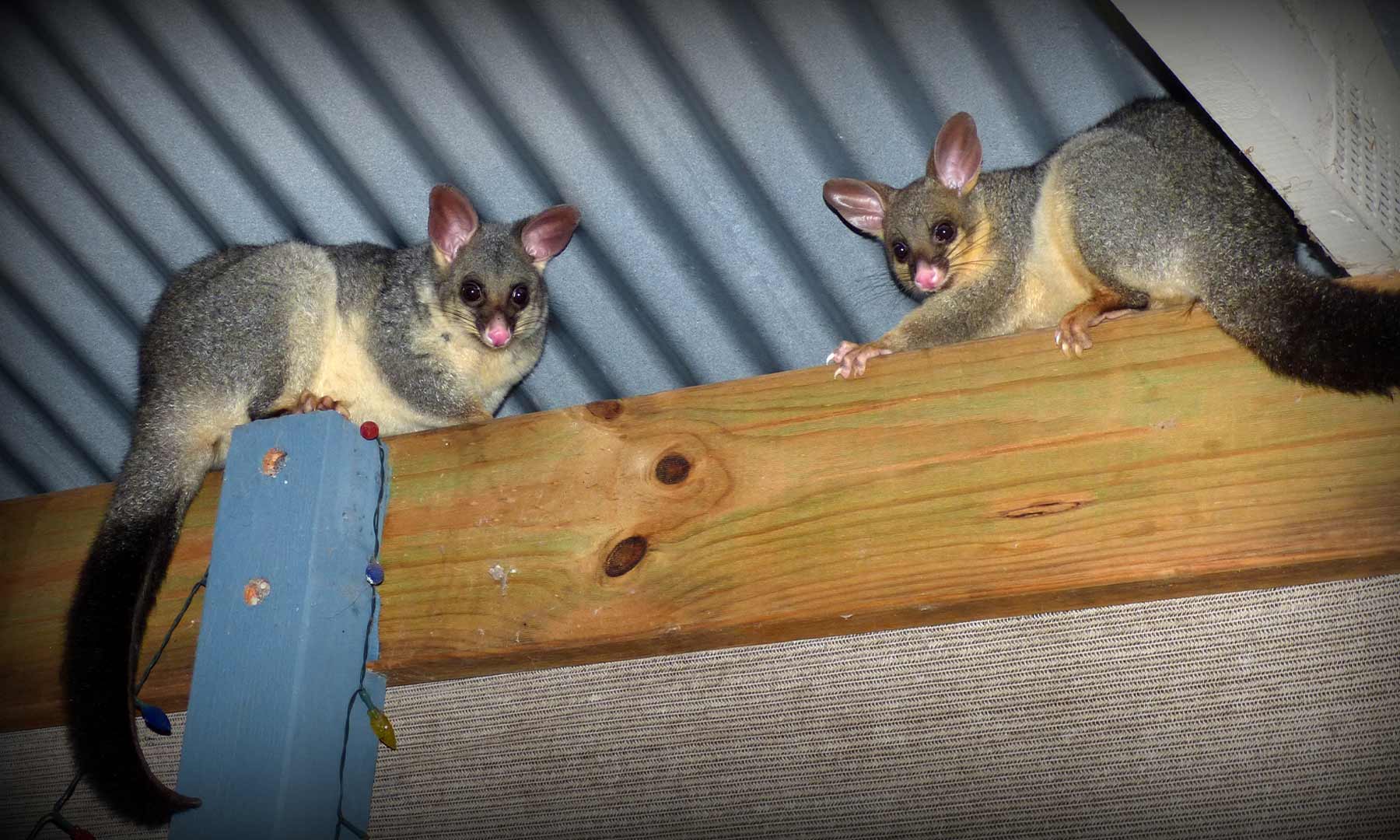
Possum management – Geelong and surrounds
Possums are a natural part of our environment, they can become problematic when they take up residence in roof spaces or damage gardens. It’s not uncommon for homeowners to spot them navigating fences, rooftops, or overhead powerlines at dusk.
Possums are protected under the Wildlife Act 1975. It is illegal to harass or interfere with possums. However, common brushtail possums living within buildings, municipal parks and municipal gardens may be controlled.
The trapping of common brushtail possums living in buildings is permitted for the purpose of releasing them on the same property or taking them to a registered vet for euthanasia.
Common ringtail possums generally do not live in buildings or cause damage to municipal parks. It is illegal to trap a ringtail possum without a permit.
Please visit DEECA website for further information on possum management.
Understanding possum behaviour
Ringtail possums are smaller, social creatures that build leafy nests – known as dreys – high off the ground in trees or shrubs. They tend to live in family groups and are relatively quiet by nature.
Brushtail possums, on the other hand, are larger, solitary, and highly territorial. They typically shelter in tree hollows but will readily move into roof cavities when natural habitats are scarce. Suburban gardens often provide an ideal food source, with plenty of foliage and fruit trees to browse.
Why possums can become a nuisance
While possums are protected native animals, they can cause issues when:
- They nest in roof voids, creating noise and mess
- They chew wiring or insulation
- They strip plants, flowers, or fruit from gardens
- They leave droppings in unwanted areas
Wildlife management and control authorisations
How to manage wildlife and apply for an Authority to Control Wildlife (ATCW):
In some areas, wildlife can damage property, farmland or the environment. Wildlife can also pose a threat to human safety, or suffer in areas where the species is over-abundant. Wildlife control may be needed to manage the problem. Wildlife control must be lawful, thoughtful and well planned. It must consider the needs of people to protect their land, property and safety and it must also ensure animal welfare and environmental values are protected. Landholders or land managers may apply to the Conservation Regulator for an Authority to Control Wildlife (ATCW).
For more information please visit vic.gov.au – wildlife management and control authorisations.
Living alongside possums – prevention tips
While it’s not always possible to keep possums away entirely, there are things you can do to limit unwanted interactions:
- Secure entry points to your roof by repairing broken tiles or gaps under eaves
- Protect gardens with flexible fencing or tree collars to deter climbing
- Avoid feeding wildlife – feeding possums encourages dependency and may lead to increased activity around your home
- Trim overhanging branches near your roofline to reduce access
Hear noises in the roof?
If you suspect a possum has made itself at home in your ceiling or yard, call in the experts at Network Pest Control. We’ll ensure it’s removed safely and that your property is protected against future visits, all while complying with native wildlife regulations.